Auto CPAP Machine Price in Bangladesh: APAP Features, Benefits & Buying Guide

How Do You Choose the Right Auto CPAP Machine?
The right auto CPAP machine depends mainly on four things: your prescribed pressure range, comfort features such as humidification and quiet operation, data tracking for follow-ups with your doctor, and your budget. Start with your sleep study results and your physician’s recommendation, then compare models within your price tier. Auto CPAP machines in Bangladesh currently range from around ৳35,000 for budget models to ৳180,000 or more for premium ones — and the sections below explain exactly what changes as you move between tiers.
If you are new to sleep therapy, this guide walks you through everything in plain language: what an auto CPAP (APAP) machine is, how it differs from fixed-pressure CPAP, which features genuinely matter, what prices look like in the Bangladeshi market in 2026, and the mistakes buyers here most often make. For a broader overview of therapy options, see our Sleep Apnea & Respiratory Care Solutions in Bangladesh.
Quick Buying Summary
- First-time user → Choose an auto CPAP with an easy interface, a ramp feature, and good humidification. You don’t need the most expensive model — you need one you’ll actually use every night.
- Budget buyer (৳35,000–50,000) → Look at proven value models such as the BMC G2S A20 or VentMed DS-6 class. You get genuine auto-adjusting therapy without premium extras.
- Comfort-focused or light sleeper → Prioritise quiet operation, expiratory pressure relief, and a heated humidifier. Mid-range models like the BMC G3 series hit this sweet spot.
- Data-driven or remote follow-up → Choose a model with app or cloud-based therapy tracking (for example the ResMed AirSense 10 or 11 AutoSet), so your doctor can review your progress.
- Frequent traveller → Consider a dedicated travel auto CPAP such as the ResMed AirMini or BMC M1 Mini — compact machines designed for trips.
What Is an Auto CPAP (APAP) Machine?
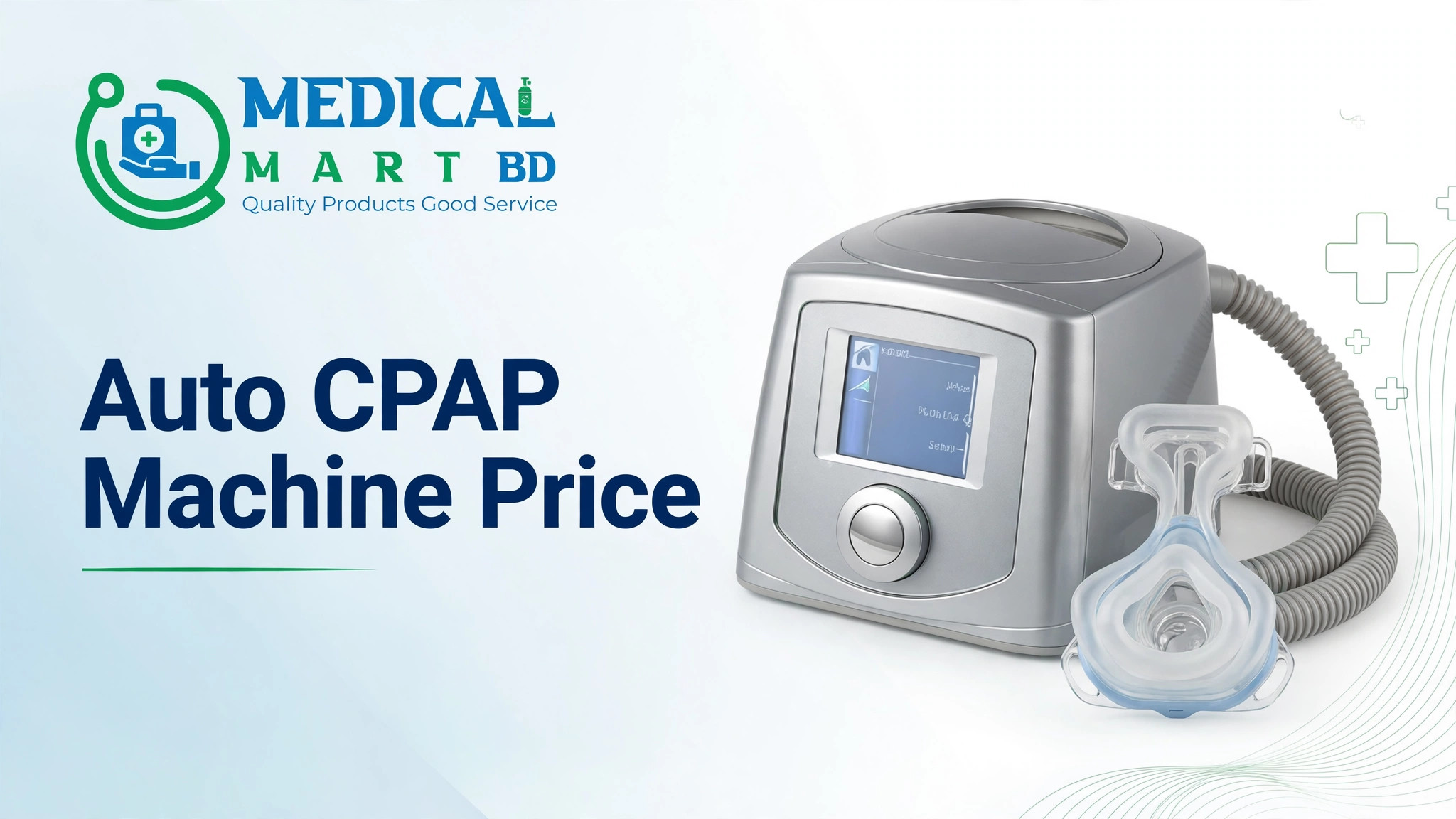
An auto CPAP — also called APAP (automatic positive airway pressure) — is a sleep therapy device that keeps your airway open during sleep by delivering pressurised air through a mask. Unlike a fixed-pressure CPAP, which blows one constant pressure all night, an auto CPAP continuously monitors your breathing and adjusts the pressure up or down within a prescribed range (commonly 4–20 cmH2O), delivering only as much pressure as you need at each moment.
It is used to treat obstructive sleep apnea (OSA): the repeated partial or complete collapse of the upper airway during sleep that causes loud snoring, gasping, and daytime exhaustion. The core entity relationship is simple — sleep apnea (condition) → auto CPAP (device) → auto-adjusting algorithm (feature) → comfortable, effective therapy (benefit) → first-time and varying-need patients (audience).
Auto CPAP exists because pressure needs are not static. Your required pressure changes with sleep position (back-sleeping usually needs more), sleep stage (REM sleep often needs more), nasal congestion, alcohol intake, and even gradual weight changes. A fixed pressure must be set high enough to cover your worst moments — which means you spend much of the night on more pressure than necessary. An auto machine solves exactly that problem.
Auto CPAP vs Fixed-Pressure CPAP: The Key Difference
A fixed-pressure CPAP delivers one continuous pressure, determined during an in-lab titration study. An auto CPAP works within a minimum–maximum range set by your doctor and titrates itself breath by breath. In practice, auto machines typically deliver a lower average pressure through the night, which many users find more comfortable — and comfort is what determines whether the machine gets used.
Fixed-pressure CPAP still has its place: some patients with very stable pressure needs do well on it, and it is the most extensively studied therapy mode. A detailed comparison of fixed-pressure options is covered in a separate guide. For an independent medical overview of how the two modes differ, see Healthline’s APAP vs CPAP explainer. The American Academy of Sleep Medicine’s clinical guidance supports initiating PAP therapy with either auto-adjusting or fixed CPAP for ongoing treatment of OSA in adults.
Types of Auto CPAP Machines Available in Bangladesh
Standard Bedside Auto CPAP
The most common type: a full-size bedside unit with an integrated humidifier, a colour display, and SD-card or basic app data. Examples sold in Bangladesh include the BMC G2S A20, BMC G3 series, VentMed DS-6, and ResMed AirStart 10. Best for: most first-time and long-term home users. Advantages: complete feature set, easy to service, widest model choice. Limitation: not designed for frequent travel.
Premium Auto CPAP with Advanced Tracking
Flagship models such as the ResMed AirSense 10 AutoSet and AirSense 11 AutoSet, or the Philips DreamStation 2, add quieter motors, refined auto algorithms, expiratory pressure relief, and cloud/app-based therapy data your clinician can review remotely. Best for: users who want maximum comfort and remote monitoring. Limitation: the highest prices in the market.
Travel Auto CPAP
Ultra-compact auto machines like the ResMed AirMini and BMC M1 Mini deliver auto-adjusting therapy in a palm-sized device for trips, Hajj/Umrah, or village visits. Best for: frequent travellers. Limitation: smaller feature set and waterless humidification; most users keep a full-size machine at home too.
Auto Bi-Level (Auto BiPAP) Machines
A quick note to avoid confusion: “auto” also exists in BiPAP devices (e.g. auto bi-level modes), which deliver two distinct pressures for inhalation and exhalation. That is a different therapy category for different medical needs — our CPAP & BiPAP hub explains where each fits.
The Most Important Buying Factors
1. Auto-Adjusting Algorithm and Pressure Range
- Why it matters: The algorithm is the heart of an auto CPAP. A good one responds quickly to flow limitation and snoring without overshooting; a crude one feels laggy or wakes you with sudden pressure jumps.
- What to look for: A clinically validated auto algorithm and an adjustable pressure range (your doctor sets the min–max). Ask whether the machine also works in fixed-CPAP mode — most auto models do, which adds flexibility.
- Who needs it: Everyone buying auto CPAP — this is the defining feature.
2. Humidification
- Why it matters: Pressurised air dries the nose and throat. In Bangladesh, dust, dry winter air, and air-conditioned bedrooms make dryness one of the top reasons new users quit therapy.
- What to look for: An integrated heated humidifier with adjustable levels; heated tubing (e.g. climate-line style) prevents rainout (condensation in the tube).
- Who needs it: Anyone with nasal congestion, dryness, or nosebleeds — and first-time users in general.
3. Noise Level
- Why it matters: The machine sits centimetres from your pillow. Even small noise differences matter for light sleepers and bed partners.
- What to look for: Premium models are engineered for quieter operation; check manufacturer-quoted noise figures and, better, real user feedback.
- Who needs it: Light sleepers, couples sharing a bedroom.
4. Data Tracking and Connectivity
- Why it matters: Therapy only works if it is working. Data (usage hours, AHI, leak) lets your doctor verify treatment and troubleshoot remotely instead of guessing.
- What to look for: SD-card data at minimum; Bluetooth/app or cloud connectivity (e.g. ResMed’s myAir/AirView ecosystem) at the premium end.
- Who needs it: Patients under active follow-up, and anyone who wants objective proof their therapy is effective.
5. Expiratory Pressure Relief and Comfort Features
- Why it matters: Breathing out against pressure is the most common comfort complaint. Relief features drop pressure slightly on exhalation.
- What to look for: Named comfort technologies (for example ResMed’s EPR), plus a ramp feature that starts therapy at low pressure while you fall asleep. Sleep Advisor’s APAP vs CPAP guide gives a clear rundown of these comfort features.
- Who needs it: New users, people who felt they were “fighting” a fixed-pressure machine.
6. Mask Compatibility
- Why it matters: The best machine in the world fails with a leaking mask. Mask fit determines therapy success more than any machine feature.
- What to look for: Standard 22 mm hose connections (universal across major brands), and buy your mask from the same supplier so fitting support is available.
- Who needs it: Everyone — budget for a quality mask and, if possible, an in-person fitting at the Dhaka showroom.
7. Warranty and After-Sales Support in Bangladesh
- Why it matters: A CPAP is a multi-year medical device. Grey-market imports with no local warranty leave you stranded when something fails.
- What to look for: Genuine products with manufacturer warranty, local service support, and available spare parts (filters, tubes, water chambers).
- Who needs it: Every buyer — treat this as non-negotiable.
Auto CPAP Comparison: Budget vs Mid-Range vs Premium
| Option | Best For | Key Advantage | Limitation | Important Consideration |
|---|---|---|---|---|
| Budget auto CPAP (৳35,000–50,000) | First-time users, tight budgets | Genuine auto-adjusting therapy at the lowest cost | Simpler displays, basic data, louder operation | Verify it is truly auto-adjusting (APAP), not a fixed-pressure unit |
| Mid-range auto CPAP (৳55,000–80,000) | Most buyers seeking comfort + value | Quieter motors, better humidification, app tracking | Fewer premium refinements | Often the best price-to-comfort ratio |
| Premium auto CPAP (৳110,000–180,000+) | Maximum comfort, remote monitoring | Best algorithms, quietest operation, cloud data | Highest upfront cost | Worth it if the machine runs nightly for years |
Best Auto CPAP for Different Users
Best for first-time users: A mid-range auto CPAP with an intuitive menu, ramp, and heated humidifier. The learning curve is gentler when the machine adapts to you rather than forcing one pressure. Models in the BMC G3 class are a common starting point our team recommends exploring in the auto CPAP category.
Best for people whose pressure needs vary: This is the core auto CPAP audience — position changers, people with REM-dominant apnea, seasonal congestion sufferers. Any genuine auto model serves them; prioritise algorithm quality.
Best for light sleepers: Premium models such as the ResMed AirSense 10 AutoSet are engineered for quiet operation and pair it with expiratory relief.
Best for budget-conscious buyers: Budget auto models deliver the same core therapy — auto-adjusting pressure — without extras. Just confirm warranty and authenticity, since this segment attracts grey imports.
Best for upgrading from fixed CPAP: If you struggled with exhaling against constant pressure, an auto CPAP with pressure relief is the logical next step. Discuss the switch with your sleep physician first.
Best for frequent travellers: A dedicated travel auto CPAP for trips plus a full-size unit at home is the ideal setup; see our travel CPAP options.
Auto CPAP Machine Price in Bangladesh (2026): What to Expect
Price guidance below is based on publicly listed prices from medical equipment retailers in Dhaka in 2026. Prices move with import costs and promotions — contact us for today’s exact pricing on any model.
Budget tier — around ৳35,000 to ৳50,000. Entry-level auto CPAP machines from brands like VentMed (around ৳38,000–40,000) and BMC’s G2S A20 (around ৳44,000–45,000). You get full auto-adjusting therapy, a humidifier, and data logging — the essentials, done well.
Mid-range — around ৳55,000 to ৳80,000. This is where comfort jumps noticeably: quieter operation, better humidification, and smartphone app tracking. Market examples include the BMC G3 series (around ৳59,000–60,000) and the ResMed AirStart 10 (around ৳76,000).
Premium — around ৳110,000 to ৳180,000+. Flagship therapy: the most refined algorithms, the quietest motors, and cloud-based clinician monitoring. The ResMed AirSense 10 AutoSet lists around ৳115,000–155,000 depending on the seller and bundle, while the newer AirSense 11 AutoSet sits around ৳144,000+.
What actually influences the price: brand and algorithm sophistication, humidifier and heated-tube inclusion, connectivity features, mask bundle, and — critically — whether you are buying a genuine unit with local warranty from established medical equipment suppliers in bangladesh versus a grey import. A suspiciously cheap “premium” machine is almost always missing the warranty that makes it a safe purchase.
Common Buying Mistakes to Avoid
- Buying without a sleep study or prescription. An auto CPAP still needs a doctor-set pressure range. Skipping diagnosis risks treating the wrong condition — or missing one. A proper sleep study (for example at NIDCH or a recognised sleep clinic) comes before any purchase.
- Choosing purely on price. The cheapest listing is often a grey import with no warranty and no setup support. Why it matters: a medical device without after-sales is a liability. Better decision: buy genuine, with warranty, from a supplier who helps with setup.
- Ignoring the mask. New buyers research machines for weeks and grab any mask. Why it matters: mask leak ruins therapy regardless of machine quality. Better decision: get fitted properly — nasal, nasal pillow, or full-face depends on your breathing pattern.
- Skipping humidification to save money. In Bangladesh’s dusty, dry-season and air-conditioned environments, dryness is a top therapy killer. Heated humidification is worth the extra cost for most users.
- Assuming the most expensive model is automatically best for you. A premium machine you can’t operate confidently loses to a mid-range one you use every night. Match the machine to your needs, not the price tag.
- Not checking warranty and spare-part availability. Filters, tubes, and water chambers are consumables. Confirm they are stocked locally before you buy.
Expert Tips
A few practical pointers from years of helping sleep apnea patients in Dhaka get started:
- Start with the mask fitting, not the machine specs. In our experience, patients who spend 20 minutes finding the right mask adapt to therapy weeks faster than those who don’t.
- Use the ramp feature for the first two weeks. Starting at low pressure while you fall asleep dramatically improves early compliance, especially for anxious first-time users.
- Clean the humidifier chamber and change filters on schedule. Bangladesh’s dust clogs filters faster than manufacturer booklets assume — check yours monthly.
- Bring your SD card or app data to follow-up appointments. Objective data lets your doctor fine-tune your pressure range instead of guessing from symptoms.
- If your needs change, your machine can adapt. Weight change, new medications, or developing nasal issues can shift your pressure needs — that’s exactly when auto CPAP earns its keep. Recheck with your physician rather than struggling silently.
Frequently Asked Questions
What is the price of an auto CPAP machine in Bangladesh? Based on 2026 listings from Dhaka-based retailers, auto CPAP machines range from around ৳35,000 for budget models (VentMed, BMC G2S series) through ৳55,000–80,000 for mid-range models (BMC G3, ResMed AirStart 10), up to ৳110,000–180,000+ for premium models like the ResMed AirSense 10 and 11 AutoSet. Prices vary by seller, bundle, and promotions.
Is auto CPAP better than fixed-pressure CPAP? For most patients, auto CPAP is at least as effective and often more comfortable, because it delivers lower average pressure. Fixed CPAP remains appropriate for patients with very stable pressure requirements. Your sleep physician should make the call based on your study results.
Do I need a prescription to buy an auto CPAP machine in Bangladesh? You should have a sleep study diagnosis and a physician’s recommended pressure range before buying. Reputable suppliers will ask about your diagnosis and help configure the machine to your doctor’s settings.
Can an auto CPAP machine replace a sleep study? No. An auto CPAP treats sleep apnea; it does not diagnose it. Daytime sleepiness can come from many conditions, and starting therapy without a diagnosis risks missing the real problem.
Which auto CPAP brands are available in Bangladesh? The main brands available locally are ResMed (AirSense 10/11 AutoSet, AirStart 10), Philips (DreamStation series), BMC (G3, G2S A20), VentMed (DS-6), and ResFree — all stocked by specialist suppliers in Dhaka with nationwide delivery.
How long does an auto CPAP machine last? With regular filter changes and basic care, a quality auto CPAP typically serves 5+ years. The consumables — masks, tubes, filters, water chambers — need periodic replacement.
What payment and delivery options are available? We deliver nationwide across Bangladesh — including Chattogram, Sylhet, Rajshahi, Khulna, Rangpur and all major districts — and accept bKash, Nagad, Rocket, cards, and cash on delivery. Dhaka customers can also visit our Mohakhali showroom for an in-person consultation and mask fitting.
Choosing Your Auto CPAP: The Bottom Line
An auto CPAP machine is the most flexible first choice for obstructive sleep apnea: it adapts to your changing pressure needs through the night, which translates directly into comfort — and comfort is what keeps the mask on. Match the tier to your budget, insist on genuine products with local warranty, get your mask fitted properly, and let your sleep study (not marketing) guide the decision.
Ready to find your fit? Browse the full auto CPAP machine range — from value picks like the BMC G3 Auto to flagship options — or explore the wider CPAP machine collection. And if you’d like personalised guidance, Medical Mart BD is one call away: our team will help you match a machine to your prescription, budget, and comfort needs.