Fixed CPAP Machine Price in Bangladesh: Types, Features & How to Choose

How Do You Choose the Right Fixed CPAP Machine?
Choose a fixed CPAP machine based on four things: your prescribed pressure from a sleep study, whether you need a heated humidifier, comfort features like ramp and exhalation relief, and your budget. In Bangladesh, fixed CPAP machine prices start from around ৳42,000 and rise to about ৳165,000 for premium models. Always buy from Sleep Apnea & Respiratory Care Solutions in Bangladesh that provide genuine devices, warranty support, and help with pressure setup.
Quick Buying Summary
Stable prescribed pressure → A basic fixed-pressure CPAP is all you need. If your titration study gave you one steady pressure number, paying extra for auto-adjusting technology adds little value.
Budget buyer → Entry-level fixed CPAP machines from around ৳42,000 deliver the same core therapy as expensive ones. Prioritise a genuine device with warranty over fancy extras.
First-time CPAP user → Choose a fixed CPAP with a heated humidifier and ramp feature. These two comfort features make the biggest difference in the first month of therapy.
Premium comfort seeker → Consider a premium fixed-pressure model such as the ResMed AirSense 10 Elite class, which adds advanced data tracking and quieter operation.
Unsure about pressure → If you do not have a confirmed single pressure from a titration study, an auto-adjusting machine may suit you better — ask your sleep physician first.
What Is a Fixed-Pressure CPAP Machine?
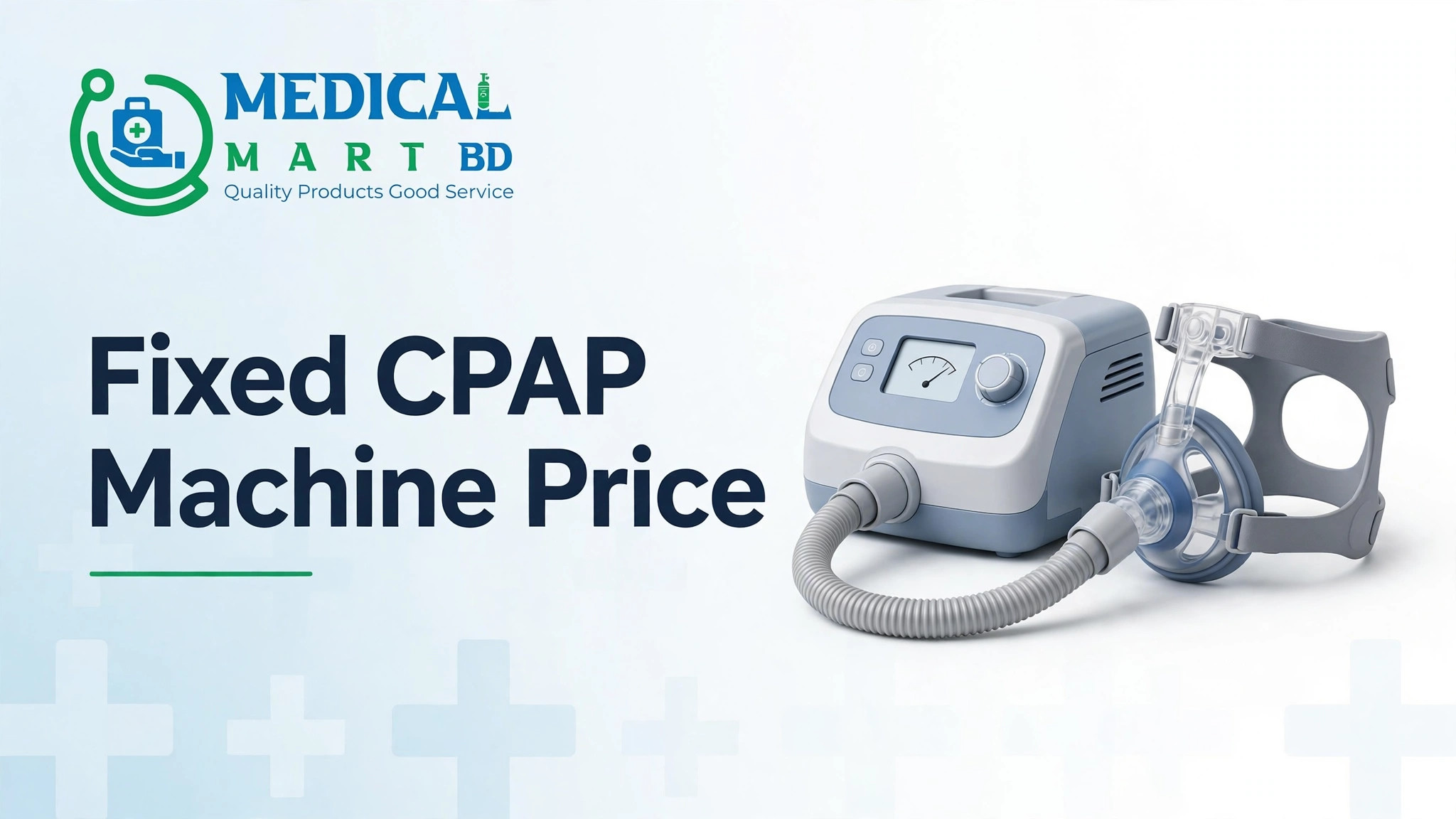
A fixed-pressure CPAP (continuous positive airway pressure) machine delivers one steady stream of pressurised air through a mask to keep your upper airway open while you sleep. “Fixed” means the pressure stays at a single level — for example, 10 cmH2O — all night, exactly as prescribed by your doctor after a titration sleep study.
Think of the entity chain this way: Sleep Apnea Treatment → PAP Therapy → CPAP Machine → Fixed-Pressure Mode → Prescribed Pressure → Patient. The fixed-pressure machine sits at the simplest, most established end of PAP therapy. It has been the standard treatment for obstructive sleep apnea for decades, and clinical guidelines consider it equally effective as auto-adjusting machines for adults with uncomplicated sleep apnea when the pressure is correctly prescribed.
A fixed CPAP is used for obstructive sleep apnea diagnosed through a sleep study (polysomnography). It solves the core problem: repeated airway collapse during sleep that causes snoring, oxygen drops, and daytime exhaustion.
Types of Fixed CPAP Machines
Not all fixed-pressure machines are the same. Here are the main types you will find in Bangladesh:
Basic Fixed CPAP (Without Humidifier)
The simplest and most affordable type. It delivers the prescribed pressure with basic controls and a ramp function. Best for budget buyers and patients in humid climates who do not suffer from nasal dryness. The main limitation is comfort — dry air can irritate the nose and throat, especially in air-conditioned bedrooms.
Fixed CPAP With Heated Humidifier
Adds a water chamber that warms and moistens the airflow. This is the most popular configuration in Bangladesh because air-conditioned rooms dry out the airway significantly. Best for anyone who wakes with a dry mouth, nosebleeds, or nasal congestion. The humidifier adds to the price but noticeably improves comfort and compliance.
Fixed CPAP With Exhalation Relief
Includes comfort technology (such as EPR — expiratory pressure relief) that slightly drops the pressure when you breathe out, making exhalation feel more natural. Best for patients prescribed higher pressures (above 12 cmH2O) who find it hard to breathe out against the airflow. Check the product specifications to confirm whether a model includes this feature.
Premium Fixed CPAP With Advanced Data
Top-tier models add detailed therapy data (AHI, leak rate, usage hours) via SD card or apps, quieter motors, and refined comfort algorithms. Best for patients and doctors who want to monitor therapy closely over time. These cost significantly more but deliver the same core treatment — you are paying for insight and refinement, not stronger therapy.
Fixed CPAP vs Auto CPAP: The One Key Difference
A fixed CPAP holds one prescribed pressure all night; an auto CPAP (APAP) adjusts the pressure up and down within a set range in response to your breathing. For a detailed breakdown of auto-adjusting machines, see our separate Auto CPAP guide. The short version: if your doctor has confirmed a single stable pressure for you, a fixed machine treats you just as effectively — clinical comparisons have found no meaningful difference in outcomes between the two modes for straightforward sleep apnea. For more background on how the two modes compare, see this overview of APAP vs CPAP therapy and the pros and cons of APAP therapy from the American Association of Sleep Technologists.
Key Buying Factors
1. Prescribed Pressure Compatibility
Why it matters: A fixed CPAP only works if it can deliver your exact prescribed pressure. Every machine covers the standard 4–20 cmH2O range, but confirm this in the specifications.
What to look for: Pressure range of 4–20 cmH2O and a clinician menu where the pressure can be set precisely to your prescription.
Who needs it: Everyone — this is non-negotiable. Never buy a fixed CPAP without a prescribed pressure from a sleep study.
2. Heated Humidification
Why it matters: Pressurised air dries the nasal passages. In Bangladesh, where most CPAP users sleep in air-conditioned rooms, dryness is the top comfort complaint.
What to look for: An integrated heated humidifier with adjustable humidity levels, and a water chamber that is easy to remove and clean.
Who needs it: Almost every user in Bangladesh, especially mouth breathers and anyone prone to nasal congestion.
3. Exhalation Relief
Why it matters: Breathing out against continuous pressure feels unnatural at first and causes many new users to abandon therapy.
What to look for: Expiratory pressure relief (EPR or equivalent) with adjustable levels, plus a ramp feature that starts pressure low and builds gradually as you fall asleep.
Who needs it: New users and anyone prescribed pressures above 12 cmH2O.
4. Noise Level
Why it matters: The machine sits on your nightstand. A loud device disturbs both you and your partner.
What to look for: Noise ratings around 26–30 dBA (about as quiet as a whisper). Premium models run quieter; check the manufacturer’s stated rating.
Who needs it: Light sleepers and anyone sharing a bedroom.
5. Data Tracking and Reporting
Why it matters: Therapy data (usage hours, AHI, mask leak) tells you and your doctor whether the treatment is actually working.
What to look for: At minimum, on-screen sleep reports. Better: SD card storage or app connectivity for detailed reports your physician can review.
Who needs it: Patients under active medical follow-up and anyone who wants proof their therapy is effective.
6. Mask Compatibility
Why it matters: The machine is only half the therapy — the mask delivers it. A poor mask fit causes leaks, noise, and dry eyes.
What to look for: Standard 22 mm air outlet compatible with all major mask brands. Try nasal, nasal pillow, and full-face styles to find your fit, and browse the CPAP and BiPAP mask range for options that suit side sleepers and mouth breathers.
Who needs it: Everyone — budget for a quality mask alongside the machine, and get a proper fitting.
7. Size and Portability
Why it matters: If you travel between Dhaka and your village home, or take frequent trips, a bulky machine becomes a burden.
What to look for: Compact footprint and weight under 1.5 kg for regular travellers; standard home units are fine if the machine stays on one nightstand.
Who needs it: Frequent travellers — though dedicated travel CPAPs exist for this purpose.
8. Warranty and After-Sales Support
Why it matters: A CPAP machine runs every night for years. When something fails, you need local service — not an overseas warranty claim.
What to look for: A clear written warranty from the seller, plus local support for setup, pressure explanation, mask fitting, and servicing.
Who needs it: Every buyer in Bangladesh. Grey-market imports without local warranty are a common and expensive trap.
9. Price and Value
Why it matters: Fixed CPAP prices in Bangladesh span a wide range, and the cheapest listing is not always the best value once warranty and authenticity are factored in.
What to look for: Compare the total package — device, humidifier, mask, warranty length, and setup support — not just the headline price.
Who needs it: Budget buyers most of all. See the price tiers below.
Fixed CPAP Options Compared
| Option | Best For | Key Advantage | Limitation | Important Consideration |
|---|---|---|---|---|
| Basic fixed CPAP | Budget buyers with a confirmed prescription | Lowest cost of entry; simple to operate | No humidifier; basic data only | Confirm genuine product + warranty, not just the lowest price |
| Fixed CPAP with humidifier | Most first-time users in Bangladesh | Far better comfort in AC rooms | Slightly larger and pricier | The best value sweet spot for the majority |
| Fixed CPAP with exhalation relief | Higher prescribed pressures | Easier exhaling; better early compliance | Feature varies by brand/model | Verify EPR availability in the specifications |
| Premium fixed CPAP | Data-driven patients, long-term users | Detailed reports; quietest operation | Highest price; same core therapy | Worth it if your doctor monitors your data remotely |
Choose by Use Case
Best for Patients With a Stable Prescribed Pressure
If your titration study identified one pressure that controls your apnea across sleep positions and stages, a fixed machine is the logical, economical choice. You are paying for exactly the therapy you need — nothing more.
Best for Budget Buyers
Fixed-pressure machines are consistently cheaper than their auto-adjusting equivalents. An entry-level fixed CPAP from around ৳42,000 delivers clinically equivalent therapy to machines costing three times more, provided the pressure is correctly set. Spend the savings on a good mask and a humidifier.
Best for First-Time CPAP Users
Simplicity helps adherence. A fixed machine has fewer settings to confuse you — set the pressure once and sleep. Pair it with ramp and humidification, and the learning curve is gentle.
Best for Users Sensitive to Pressure Changes
Some sleepers find the rising and falling pressure of auto machines disruptive. If pressure fluctuations wake you up, the steady airflow of a fixed machine may actually help you sleep better.
Best for Bangladesh’s Climate
Heat, humidity swings, and heavy AC use define sleep in Bangladesh. A fixed CPAP with a heated humidifier handles this environment well — moisture prevents the dryness that AC-cooled air causes, and the simple design means fewer parts to maintain in dusty conditions.
Fixed CPAP Machine Price in Bangladesh: What to Expect
Based on current retailer listings in the Bangladesh market (2026), fixed CPAP machine prices fall into three broad tiers. Prices move with import costs, brand, warranty terms, and what is included in the package, so treat these as researched market ranges — contact Medical Mart BD for current pricing on specific models.
Budget Tier: From Around ৳42,000
Entry-level fixed-pressure machines from value brands start at approximately ৳42,000 in Bangladesh. At this tier you get reliable single-pressure therapy with basic controls. Humidifiers may be optional add-ons, and data reporting is usually limited to on-screen summaries. This tier suits patients with a confirmed prescription who want effective therapy at the lowest genuine cost.
Mid-Range Tier: Approximately ৳55,000–90,000
The value sweet spot. Mid-range fixed CPAP machines typically include an integrated heated humidifier, ramp, exhalation relief, and better noise control. Build quality and warranty terms improve noticeably over the entry tier. Most first-time buyers in Bangladesh land here.
Premium Tier: Approximately ৳150,000–165,000
Premium fixed-pressure models — such as the ResMed AirSense 10 Elite class, listed around ৳165,000 by Bangladesh retailers — add refined comfort algorithms, detailed therapy data, and the quietest operation. The core treatment is the same as the budget tier; you are paying for monitoring, comfort, and brand engineering.
What Influences the Price
Brand reputation, integrated vs optional humidifier, data connectivity, noise engineering, warranty length, and whether the package includes a mask and setup support. A ৳42,000 machine with a proper warranty and setup guidance is better value than a cheaper grey import with no after-sales support.
Common Buying Mistakes
Buying without a prescribed pressure. A fixed CPAP set to the wrong pressure can be ineffective or uncomfortable. Always complete a sleep study and titration first — consult a physician at NIDCH or a sleep clinic in Dhaka.
Choosing by price alone. The cheapest listing often means no warranty, no setup help, and possibly a refurbished unit. Factor in authenticity and after-sales support.
Skipping the humidifier to save money. In air-conditioned bedrooms, this is the most regretted saving in CPAP therapy. Dryness drives more users to quit than any other comfort issue.
Ignoring the mask. A ৳150,000 machine with a poorly fitting mask performs worse than a ৳45,000 machine with a well-fitted one. Budget for mask fitting as part of the purchase.
Assuming “fixed” means “outdated.” Fixed-pressure CPAP is not obsolete technology — it is the original, guideline-supported therapy. For stable prescriptions it remains the rational choice.
Not checking warranty terms. Ask what the warranty covers, for how long, and who services the machine locally before you pay.
Expert Tips
Expert Tip — Md Hasibul Islam, Founder, Medical Mart BD: Never change your CPAP pressure yourself because therapy “feels off.” Pressure changes are medical decisions — they belong to your sleep physician, based on your data and symptoms. What you can adjust freely are comfort settings: humidity level, ramp time, and mask fit. If therapy feels wrong for more than a few nights, bring your machine’s data report to your doctor rather than guessing.
A few more practical notes from our team, based on supporting CPAP users across Bangladesh every day:
- Try before you commit. If you are unsure you can sleep with a machine, renting a CPAP for a short trial at home answers the question honestly — explore CPAP and BiPAP machine rental in Dhaka before spending ৳50,000+.
- Clean the humidifier chamber weekly with mild soap and air-dry it fully. In Bangladesh’s climate, mineral deposits and biofilm build up fast.
- Replace filters on schedule. A clogged filter makes the motor work harder and the air dirtier — both shorten the machine’s life.
- Keep your prescription accessible. You will need it for pressure setup, warranty claims, and any future machine purchase.
Frequently Asked Questions
What is the price of a fixed CPAP machine in Bangladesh?
Fixed CPAP machine prices in Bangladesh start from around ৳42,000 for entry-level models, with mid-range options typically between ৳55,000 and ৳90,000, and premium models reaching approximately ৳150,000–165,000. Final pricing depends on brand, humidifier inclusion, warranty, and package contents — contact medical equipment suppliers in bangladesh like Medical Mart BD for current model-wise pricing.
Is a fixed CPAP machine better than an auto CPAP machine?
Neither is universally better. A fixed CPAP delivers one prescribed pressure; an auto CPAP adjusts within a range. Clinical evidence shows comparable outcomes for straightforward obstructive sleep apnea when the pressure is correctly prescribed. Fixed suits stable prescriptions and budgets; auto suits variable pressure needs or uncertain titration.
Do I need a sleep study before buying a fixed CPAP machine?
Yes. A fixed machine requires a specific pressure number, which can only come from a titration sleep study. Buying and guessing a pressure risks ineffective therapy or discomfort. Consult a sleep physician first.
Can I use a fixed CPAP machine without a humidifier in Bangladesh?
You can, but most users regret it. Air-conditioned bedrooms dry the airway significantly, and a heated humidifier is the single biggest comfort upgrade for the money in our climate.
How long does a fixed CPAP machine last?
With regular filter changes and chamber cleaning, a quality machine typically serves 5+ years of nightly use. Warranty terms vary by brand — confirm the coverage period before buying.
Is the ResMed AirStart 10 a fixed CPAP machine?
The AirStart 10 family includes both fixed-pressure (CPAP) and auto-adjusting (APAP) variants, so check the exact model. As a budget-friendly ResMed option in Bangladesh, the ResMed AirStart 10 is worth comparing — confirm with the seller whether the unit is the fixed-pressure or auto version before deciding.
Can I travel with a fixed CPAP machine?
Yes. Standard fixed CPAP machines work on 100–240V power, which covers Bangladesh and most countries. They are bulkier than dedicated travel models, so frequent flyers may prefer a compact travel CPAP instead.
Where to Buy a Fixed CPAP Machine in Bangladesh
Start by confirming your prescription, then compare genuine options across the three price tiers above. Browse the full CPAP machine category to see available models, and read our CPAP & BiPAP hub for the complete therapy picture.
Medical Mart BD supplies 100% original CPAP machines from ResMed, Philips, BMC, and other trusted brands — with warranty support, pressure setup guidance, mask fitting assistance, and nationwide delivery across Bangladesh. Visit the Dhaka showroom at Mohakhali for an in-person consultation, or order online with bKash, Nagad, card, or cash on delivery.