CPAP vs BiPAP: Difference, Uses & How to Choose

The Short Answer: CPAP vs BiPAP at a Glance
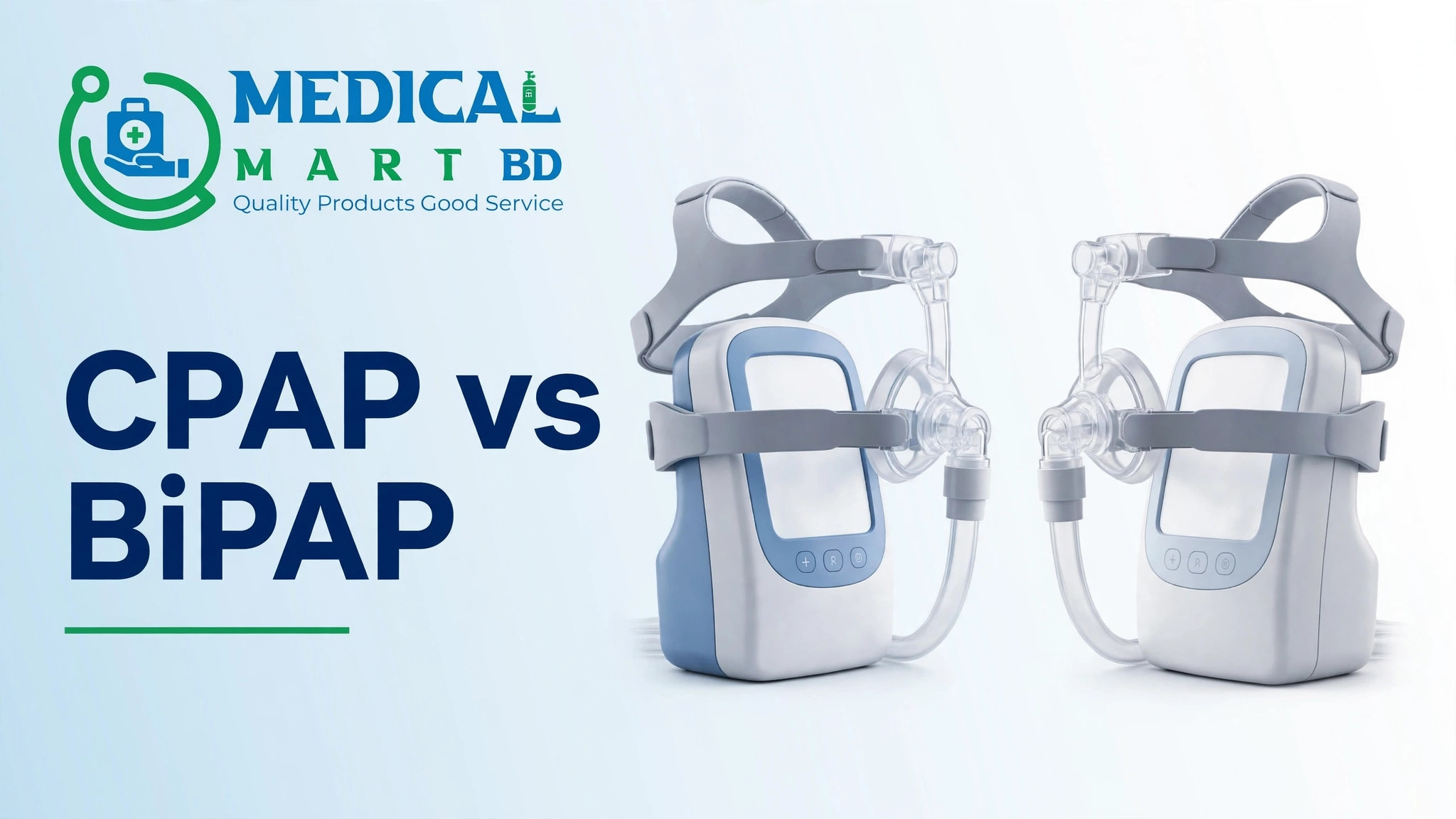
CPAP is better suited to people diagnosed with obstructive sleep apnea who need a straightforward, proven therapy, while BiPAP is the stronger option for people with central or complex sleep apnea, COPD-related breathing problems, or those who cannot tolerate exhaling against CPAP pressure. The right choice depends mainly on your diagnosis, the pressure levels your doctor prescribes, how comfortably you tolerate therapy, and your budget.
Choose a CPAP machine if: You have been diagnosed with obstructive sleep apnea (the most common type); your prescribed pressure is in the standard range and you tolerate it well; you want the most widely available, simplest therapy with the most model choices; budget matters — CPAP machines generally cost less than BiPAP machines.
Choose a BiPAP machine if: You have central sleep apnea, complex/mixed apnea, or a condition like COPD; you need high pressure settings and find exhaling against CPAP uncomfortable; you tried CPAP but could not adjust to it, and your doctor recommends bilevel therapy; your physician specifically prescribes bilevel pressure support.
One important note before we go further: neither machine is something you choose on your own. A sleep study (polysomnography) and a physician’s prescription determine which device — and which pressure settings — are appropriate for you. In Bangladesh, sleep studies are commonly done at centres such as NIDCH or private sleep clinics in Dhaka. This guide explains the differences so you can have an informed conversation with your doctor, not so you can self-diagnose.
CPAP vs BiPAP: Quick Comparison Table
| Feature | CPAP | BiPAP | What It Means |
|---|---|---|---|
| Full name | Continuous Positive Airway Pressure | Bilevel Positive Airway Pressure | Both are PAP (positive airway pressure) therapies |
| Pressure delivery | One continuous pressure for inhalation and exhalation | Two pressures: higher IPAP for inhalation, lower EPAP for exhalation | BiPAP makes breathing out feel more natural |
| Typical pressure range | Up to around 20 cm H2O | Often up to around 25 cm H2O or more | BiPAP suits patients who need higher support |
| Main use | Obstructive sleep apnea (first-line treatment) | Central/complex sleep apnea, COPD, respiratory conditions, CPAP-intolerant patients | Your diagnosis decides which one fits |
| Comfort | Very good for most; some struggle exhaling at high pressures | Easier exhalation; often preferred at high pressures | Comfort affects whether you actually keep using therapy |
| Complexity | Simpler to set up and use | More settings (two pressures, backup rates on some modes) | Both need professional setup and titration |
| Price in Bangladesh | Generally lower; CPAP machines range roughly ৳35,000–৳120,000+ | Generally higher due to dual-pressure technology | Check current model prices before deciding |
| Portability | Travel-size CPAP options widely available | Fewer compact travel options | Matters if you travel frequently |
What Is a CPAP Machine?
A CPAP (Continuous Positive Airway Pressure) machine is the most common and most studied treatment for obstructive sleep apnea. It works by delivering one steady stream of pressurised air through a mask and hose while you sleep. That constant pressure acts like an invisible splint, keeping your upper airway open so it does not collapse and block your breathing during the night.
Modern CPAP machines are far more comfortable than the earliest models. Many include pressure-relief features that ease off slightly as you exhale, heated humidification to prevent dryness, and quiet motors. Auto-adjusting CPAP machines can also vary the single pressure within a prescribed range in response to your breathing through the night.
CPAP is considered the first-line therapy for obstructive sleep apnea worldwide, and that holds true in Bangladesh as well. Because it is the most prescribed device, it also has the widest range of models and the most competitive pricing — you can explore the available CPAP machines to see what different brands and feature levels offer.
Limitations: CPAP delivers the same pressure when you breathe in and out. At higher prescribed pressures, some people find exhaling against that constant airflow uncomfortable, which can make it harder to stick with therapy. CPAP is also not designed for conditions where the breathing problem is neurological (central apnea) or where the lungs need ventilatory support beyond keeping the airway open.
What Is a BiPAP Machine?
A BiPAP (Bilevel Positive Airway Pressure) machine delivers two distinct pressure levels: a higher pressure when you breathe in (IPAP — inspiratory positive airway pressure) and a lower pressure when you breathe out (EPAP — expiratory positive airway pressure). The machine switches between the two in time with your breathing.
The practical effect is simple: inhalation gets strong support, while exhalation meets much less resistance. For people who need high pressures, or whose lungs need extra help, that difference in exhalation comfort is significant. It is also why BiPAP is commonly prescribed for central sleep apnea — where the airway is open but the brain intermittently fails to signal breathing — and for chronic respiratory conditions such as COPD, where patients benefit from assisted ventilation.
BiPAP devices come in different modes (such as S, ST, and auto-adjusting variants), which control how the machine responds to your breathing pattern. Choosing between those modes is a separate clinical decision your physician makes based on your sleep study — it is not something to select off a shelf.
You can browse the available BiPAP machines to see which models are currently supplied in Bangladesh.
Limitations: BiPAP machines are more complex, with more settings to configure, so professional setup matters even more. They are generally more expensive than CPAP machines because of the dual-pressure technology. For straightforward obstructive sleep apnea at moderate pressures, BiPAP offers no proven advantage over CPAP — which is why doctors do not prescribe it as the default.
Head-to-Head: CPAP vs BiPAP
How They Deliver Air Pressure
Difference: CPAP maintains one continuous pressure throughout the breathing cycle. BiPAP alternates between a higher inhalation pressure and a lower exhalation pressure. Why it matters: The pressure pattern is the single biggest technical difference between the two therapies, and it drives almost every other difference — comfort, indications, and cost. Who benefits: People who need only airway support do perfectly well on single-pressure CPAP. People who need ventilatory assistance, or who cannot exhale comfortably against continuous pressure, benefit from bilevel delivery. Practical verdict: If your prescription is for standard airway support, CPAP’s simpler single pressure is all you need. If your doctor prescribes two pressure levels, that is a clinical signal you need BiPAP.
Who Each Machine Is For
Difference: CPAP is the first-line treatment for obstructive sleep apnea. BiPAP is prescribed for central or complex sleep apnea, COPD and other chronic respiratory conditions, and for patients who fail or cannot tolerate CPAP. Why it matters: Using the wrong device for your condition means ineffective treatment. A BiPAP will not fix poorly managed obstructive apnea better than a properly titrated CPAP, and a CPAP cannot do the ventilatory work a COPD or central-apnea patient needs. Who benefits: Straightforward OSA patients benefit from CPAP’s simplicity and evidence base. Patients with complex breathing disorders benefit from BiPAP’s flexibility. Practical verdict: Your sleep study results and diagnosis — not marketing, not price — decide which machine is for you. As the Sleep Foundation’s CPAP vs BiPAP guide notes, the decision to use or switch PAP treatments should always be made with your healthcare team.
Comfort and Ease of Breathing
Difference: Exhaling against CPAP’s constant pressure can feel like breathing out against resistance, especially at high settings. BiPAP drops the pressure on exhalation, which most users find noticeably more natural. Why it matters: Comfort is not a luxury in sleep therapy — it is the main factor in whether people actually use their machine every night. An unused machine treats nothing. Who benefits: Most new CPAP users adjust within a few weeks, particularly with pressure-relief features and correct mask fitting. Those who genuinely cannot adapt, or who need very high pressures, are the classic candidates for BiPAP. Practical verdict: Start with CPAP if that is what is prescribed; most people adapt. If exhalation discomfort persists despite proper mask fit and settings review, ask your doctor whether bilevel therapy is appropriate.
Price in Bangladesh
Difference: BiPAP machines generally cost more than CPAP machines because of the dual-pressure technology and more advanced components. Why it matters: Out-of-pocket cost is a real constraint for most families in Bangladesh, and the price gap between the two device types can be substantial. Who benefits: Budget-conscious buyers with standard OSA get excellent value from CPAP — the site’s own buying information notes CPAP machines in Bangladesh generally range from around ৳35,000 to ৳120,000+ depending on brand, model, and features. BiPAP buyers are typically paying for a medical necessity their condition requires, not an optional upgrade. Practical verdict: Do not pay BiPAP prices unless your prescription calls for it. For current model-wise pricing on either device type, contact us directly, since prices shift with import costs and stock.
Setup, Size and Ease of Use
Difference: CPAP machines are simpler — one pressure to titrate, fewer modes, and the widest selection including compact travel models. BiPAP machines have more parameters (IPAP, EPAP, and mode-specific settings) and fewer ultra-portable options. Why it matters: More settings mean more that must be configured correctly. Both devices need professional setup, but BiPAP leaves less room for guesswork. Who benefits: First-time users and frequent travellers benefit from CPAP’s simplicity and travel-friendly models. Patients with complex prescriptions benefit from BiPAP’s adjustability — configured by a professional. Practical verdict: Whichever device you get, insist on proper setup guidance: mask fitting, pressure explanation, and humidifier setup. Post-purchase setup support — available at the Dhaka showroom and over phone/WhatsApp — matters even more for BiPAP’s extra settings.
Pros and Cons
CPAP Machines
Pros: First-line, most-studied treatment for obstructive sleep apnea; simple to understand, set up, and use daily; widest range of models, brands, and price points in Bangladesh; compact travel models widely available; lower cost than BiPAP.
Cons: Exhaling against constant pressure bothers some users, mainly at high pressures; not suitable for central apnea, complex apnea, or COPD-related needs; single pressure pattern cannot assist weak breathing effort.
BiPAP Machines
Pros: Two pressure levels make exhalation significantly more comfortable; treats central and complex sleep apnea, not just obstructive; supports patients with COPD and other chronic respiratory conditions; higher maximum pressure capability for patients who need it; an option for people who could not tolerate CPAP.
Cons: More expensive than CPAP machines; more complex settings — professional configuration is essential; overkill (and not clinically better) for standard obstructive apnea; fewer travel-size options.
Which Should You Choose? Best for Different Users
Newly diagnosed with obstructive sleep apnea: CPAP. It is the standard starting point, it works, and it costs less. Most people adapt within weeks with the right mask and settings.
Severe OSA needing high pressures: Usually CPAP first — modern machines handle high pressures well. If exhalation becomes intolerable despite adjustments, your doctor may move you to BiPAP.
Central or complex sleep apnea: BiPAP, as prescribed. CPAP is not designed for apneas where the brain fails to trigger breathing.
COPD or chronic respiratory conditions: BiPAP, per your pulmonologist. The ventilatory support is the point of the prescription.
Tried CPAP and could not tolerate it: Do not simply buy a BiPAP on your own. Go back to your sleep specialist — sometimes the fix is a different mask, pressure relief settings, or humidification, and sometimes it genuinely is bilevel therapy. The prescription decides.
Budget buyers: CPAP gives you proven therapy at the lowest entry cost. Never stretch to a BiPAP for features your condition does not require.
Frequent travellers: CPAP has the clear edge — travel-size models are an established category, while compact BiPAP options are limited.
Price vs Value in Bangladesh
Think of it as price → features → medical need → value. A CPAP machine in Bangladesh generally ranges from around ৳35,000 to ৳120,000+ depending on brand (ResMed, Philips, BMC and others), model, and features such as auto-adjusting pressure, heated humidification, and data connectivity. That range covers a genuine therapy spectrum — a well-chosen mid-range CPAP treats obstructive apnea just as effectively as a premium one if the pressure is right.
BiPAP machines sit above that range because you are paying for dual-pressure technology and more sophisticated ventilation modes. The extra cost is justified when — and only when — your condition requires bilevel support. Paying more for a BiPAP you do not need buys no health benefit; under-buying a CPAP when you need BiPAP leaves your condition under-treated.
Because prices move with import costs, always confirm current pricing before deciding. If you are weighing options, it also helps to read a dedicated CPAP and BiPAP buying guide alongside this comparison so the price discussion sits in full context.
Frequently Asked Questions
Is BiPAP better than CPAP?
Neither is universally better. BiPAP is better for central/complex apnea, COPD, and CPAP-intolerant patients; CPAP is better — simpler and cheaper — for standard obstructive sleep apnea. “Better” depends entirely on diagnosis.
What is the main difference between CPAP and BiPAP?
CPAP delivers one continuous air pressure; BiPAP delivers two — a higher pressure when you inhale (IPAP) and a lower pressure when you exhale (EPAP). That is the core technical difference everything else follows from.
Can I use a BiPAP machine if I just have sleep apnea?
Only if your doctor prescribes it. For ordinary obstructive sleep apnea, CPAP is the standard treatment and BiPAP offers no proven advantage. BiPAP is for specific indications your sleep study must confirm.
Which is more comfortable, CPAP or BiPAP?
Most users find BiPAP more comfortable to exhale against because the pressure drops on exhalation. That said, most CPAP users adapt well, especially with pressure-relief features and a properly fitted mask.
Can I switch from CPAP to BiPAP on my own?
No. Switching therapy types changes your treatment — it needs a new evaluation and prescription from your sleep specialist, usually with a titration study to set the two pressure levels correctly.
Which is cheaper in Bangladesh?
CPAP machines are generally cheaper, with models in Bangladesh roughly spanning ৳35,000 to ৳120,000+. BiPAP machines cost more due to dual-pressure technology. Confirm current prices with a trusted seller before budgeting.
Do I need a prescription for CPAP or BiPAP in Bangladesh?
You should have one. A sleep study and physician prescription ensure you get the right device at the right pressures — wrong settings can be ineffective or harmful. Reputable medical equipment suppliers in bangladesh will ask about your prescription and help you understand it.
Making the Right Choice
CPAP and BiPAP are both excellent therapies — for different patients. CPAP’s simplicity, evidence base, and value make it the right answer for most people with obstructive sleep apnea. BiPAP’s dual-pressure flexibility makes it indispensable for central and complex apnea, COPD, and those who truly cannot tolerate CPAP.
The decision path is straightforward: get a proper sleep study, follow your physician’s prescription, choose a genuine machine from an authorised source, and make sure it is set up professionally. If you are navigating that process, Medical Mart BD — a Dhaka-based provider of Sleep Apnea & Respiratory Care Solutions in Bangladesh — can walk you through suitable CPAP and BiPAP options, proper mask fitting, and after-sales support once your doctor has decided which therapy you need.