How to Clean and Maintain Your CPAP Machine in Bangladesh’s Climate

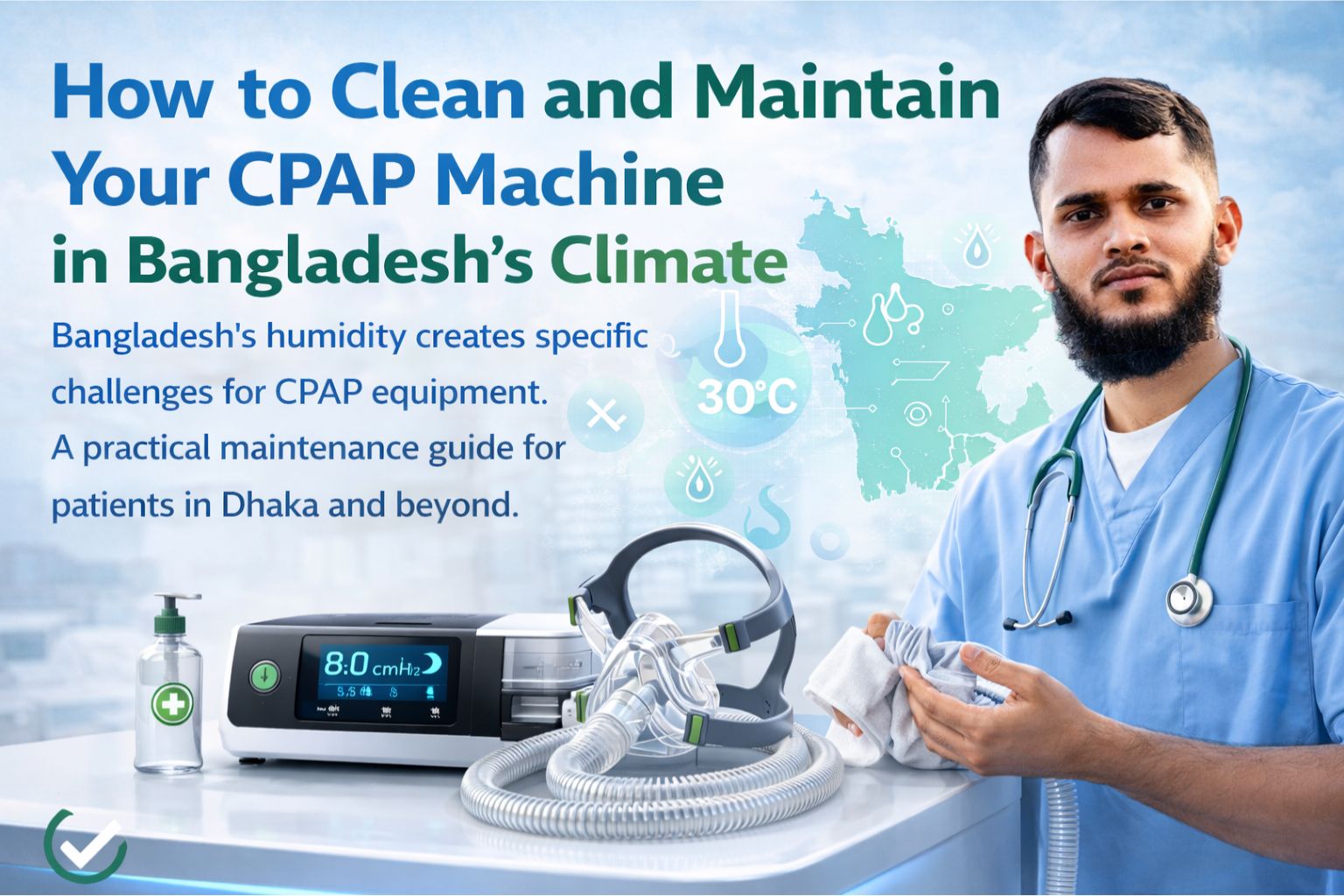
A CPAP machine needs daily mask and tubing care, weekly humidifier cleaning, and monthly filter checks to work properly and stay hygienic. In Bangladesh, high humidity, dust, and frequent power interruptions make this routine more important than it would be in a drier climate, since moisture left inside the tubing or water chamber can encourage mold and bacterial growth faster.
This guide walks through a practical cleaning schedule, explains which parts wear out and when to replace them, and answers common questions about water quality, sanitizing gadgets, and machine longevity. It is written for general educational purposes and does not replace the cleaning instructions in your specific machine’s user manual or advice from your treating physician.
Why CPAP Cleaning Matters More in Bangladesh’s Climate
CPAP machines pull in room air and push it through a mask connected to your airway all night, every night. Anything sitting inside the tubing, mask, or water chamber, whether it’s moisture, dust, or mineral residue, ends up close to what you breathe. Three conditions specific to Bangladesh make this more relevant here than in many other markets:
- High humidity for most of the year. Warm, damp air slows down drying time for tubing and mask cushions, which extends the window for mold and bacteria to develop if parts aren’t dried properly between cleanings.
- Dust and airborne particulate matter. Urban areas in Bangladesh, particularly Dhaka, have higher ambient dust levels, which can clog the machine’s intake filter faster than the manufacturer’s default replacement schedule assumes.
- Frequent power interruptions. Load-shedding or short power cuts don’t damage a CPAP machine directly, but restarting a humidifier that was left with standing water for hours during a hot day is a common way mold gets a head start.
None of this means CPAP therapy is riskier in Bangladesh. It means the cleaning routine below needs to be followed consistently rather than occasionally.
CPAP Machine Parts You Need to Clean
A standard CPAP setup has four parts that need regular attention, each on a different schedule:
| Part | What it does | Cleaning frequency |
|---|---|---|
| Mask (nasal, pillow, or full-face) | Sits directly on your face and forms the air seal | Daily wipe, deeper wash weekly |
| Tubing (hose) | Carries pressurized air from the machine to the mask | Weekly wash |
| Humidifier water chamber | Holds water that adds moisture to the airflow | Daily water change, weekly deep clean |
| Air intake filter | Filters incoming room air before it reaches the machine | Check weekly, replace on manufacturer’s schedule |
The main unit itself (the motor and control housing) is never submerged in water. It only needs a dry or slightly damp cloth wipe on the outside.
Daily CPAP Cleaning Routine
Every morning, after you finish using the machine, do the following:
- Empty the humidifier water chamber completely. Don’t leave standing water in it during the day, especially in warm weather, since stagnant water is where bacteria growth starts fastest.
- Wipe the mask cushion with a clean, damp cloth to remove facial oils and skin residue.
- Air-dry the mask in a clean, ventilated spot, away from direct sunlight, which can degrade silicone cushions over time.
- Refill the humidifier with fresh distilled water before your next use, not tap water left over from the previous night.
This daily routine takes under five minutes and prevents most of the buildup that causes bigger cleaning problems later.
Weekly CPAP Cleaning Routine
Once a week, go a step further:
- Disconnect the tubing from both the machine and the mask.
- Wash the tubing in warm water with a small amount of mild, unscented soap. Avoid strong detergents or antibacterial soaps with heavy fragrance, since residue can irritate the airway.
- Rinse thoroughly and hang the tubing to air-dry fully, ideally somewhere with airflow rather than a closed, humid bathroom.
- Wash the full mask assembly (cushion, frame, and headgear straps if washable) the same way.
- Clean the humidifier water chamber with warm soapy water, rinse well, and let it air-dry completely before the next fill.
Make sure every part is completely dry before reassembling. Reconnecting a still-damp tube trap moisture inside, which is exactly the condition mold needs.
Monthly and Periodic Maintenance Tasks
- Check the air intake filter. Most machines use a reusable foam filter and a disposable ultra-fine filter. In dustier parts of Bangladesh, check the foam filter weekly and rinse it if visibly gray or clogged, then replace disposable filters on the schedule your manufacturer recommends, which is often monthly but can be shorter with heavy dust exposure.
- Inspect the tubing for cracks or cloudiness. Tubing typically needs full replacement every three to six months, though this varies by manufacturer and how often it’s washed.
- Inspect the mask cushion for wear. Silicone cushions lose their seal quality over time, usually within a similar three-to-six-month window, and a worn cushion often shows up as air leaks or red marks on the face.
- Wipe down the machine housing with a dry or barely damp cloth to remove dust buildup around vents.
Water Quality: Why Distilled Water Matters in Bangladesh
Should I use tap water in my CPAP humidifier? No, most manufacturers recommend distilled water only. Tap water, including treated municipal water common in Dhaka and other cities, contains dissolved minerals that build up inside the humidifier chamber over time, leaving a white or chalky residue and potentially affecting the heating element’s performance.
Distilled water is widely available in Bangladesh through pharmacies and general stores. If distilled water isn’t accessible on a given day, using tap water occasionally is unlikely to cause immediate harm, but relying on it regularly speeds up mineral buildup and shortens the water chamber’s usable life. Check your specific machine’s manual, since a few models specify particular water requirements.
Cleaning CPAP During Monsoon and High-Humidity Months
Bangladesh’s monsoon months bring sustained high humidity, which slows down air-drying significantly. A few adjustments help during this period:
- Increase air circulation around drying parts. Use a fan or a spot near an open window rather than a closed bathroom, where humidity is already high.
- Shorten the gap between cleanings if parts still feel damp the next time you go to use them. A tube or mask that hasn’t fully dried should be dried further before reassembly, not used damp.
- Watch for a musty smell, which is often the first sign of mold starting inside tubing or the water chamber. If this happens, wash the affected part immediately with warm soapy water, rinse thoroughly, and dry completely before the next use. If the smell persists after cleaning, the part may need replacing.
Cleaning CPAP After a Power Outage
A power cut during the night doesn’t damage the CPAP machine itself in most cases. The practical concern is what happens to the humidifier’s water chamber if it sat unused, sometimes warm, for an extended period. If a power outage interrupts a session, empty and rinse the water chamber before your next use rather than assuming it’s fine to refill directly. For households with frequent or extended outages, a travel CPAP with battery compatibility, covered in our comparison of the best CPAP machines in Bangladesh, can serve as a practical backup option.
Common CPAP Cleaning Mistakes to Avoid
- Using scented or antibacterial soap on the mask or tubing, which can leave residue that irritates the airway.
- Reassembling parts before they’re fully dry, trapping moisture inside the tubing or mask frame.
- Leaving water in the humidifier chamber all day, particularly in warm weather.
- Skipping filter checks because the machine still runs fine. A clogged filter reduces airflow gradually, so the change isn’t always obvious night to night.
- Assuming a sanitizing gadget replaces washing. Devices marketed as CPAP sanitizers are not a substitute for the manual cleaning routine described above (more on this below).
Do I Need a CPAP Cleaning Machine or UV Sanitizer?
Usually not as a replacement for standard washing. Ozone-based and UV-light CPAP cleaning devices are marketed as a faster alternative to manual cleaning, but regulatory bodies including the U.S. Food and Drug Administration (FDA) have issued safety communications noting that ozone-based cleaning products have not been proven safe or effective for cleaning CPAP equipment, and that manufacturer-recommended soap-and-water cleaning remains the standard, tested approach.
If you’re considering one of these devices, check your specific CPAP machine’s manufacturer guidance first, since using an unapproved cleaning method on some machines can affect the warranty. For most users in Bangladesh, the daily and weekly routine described above is sufficient without additional equipment.
How to Know When to Replace CPAP Parts
| Part | Typical replacement interval | Signs it needs replacing sooner |
|---|---|---|
| Mask cushion | 3 to 6 months | Visible cracks, hardening, poor seal, red marks on face |
| Tubing | 3 to 6 months | Cloudiness, cracks, persistent odor after washing |
| Disposable filter | Monthly (shorter in high-dust areas) | Gray or discolored appearance, visible dust buildup |
| Reusable foam filter | Rinse weekly, replace every 6 months | Torn, thinning, or no longer springs back after rinsing |
| Water chamber | 6 to 12 months | Cracking, cloudy residue that doesn’t clean off, mineral buildup |
These intervals are general guidance based on common manufacturer recommendations and can vary by brand and usage frequency. Your machine’s user manual is the most accurate source for your specific model.
When to Consider Servicing or Replacing the Machine Itself
If you’re cleaning parts correctly and still noticing reduced airflow, unusual noise, or error messages on the display, that points to a mechanical issue rather than a hygiene one. At that point, contact the supplier or manufacturer for servicing rather than continuing to use the machine as is. If your current machine is older and repeatedly needs servicing, it may also be worth comparing replacement costs against a current CPAP machine price in Bangladesh to see whether repair or replacement makes more sense.
If you’re still early in your CPAP journey and unsure whether ongoing maintenance costs make more sense than a temporary rental, this comparison of renting vs buying medical equipment in Bangladesh walks through that decision in more detail.
Quick CPAP Maintenance Checklist
- Empty and refill the humidifier chamber daily with distilled water
- Wipe the mask cushion daily
- Wash the tubing and full mask assembly weekly
- Deep clean the humidifier chamber weekly
- Check the intake filter weekly, replace on schedule
- Fully air-dry every part before reassembly
- Replace mask cushion and tubing every 3 to 6 months
- Watch for musty smells during monsoon months and act on them immediately
- Avoid tap water in the humidifier when distilled water is available
- Contact your supplier if airflow or performance issues persist after cleaning
Frequently Asked Questions
How often should I clean my CPAP machine?
The mask needs a daily wipe, the tubing and humidifier chamber need a deeper wash weekly, and the intake filter should be checked weekly and replaced on the schedule recommended by the manufacturer. Daily habits matter more than occasional deep cleans for preventing mold and bacteria buildup
Can I use tap water in my CPAP humidifier?
It’s not recommended as a regular practice. Distilled water is preferred because tap water contains minerals that build up inside the humidifier chamber over time. Occasional use of tap water is unlikely to cause immediate harm, but relying on it regularly shortens the chamber’s usable life.
Why does my CPAP tubing smell musty?
A musty smell usually means moisture was trapped inside the tubing before it fully dried, which allows mold or bacteria to develop. Wash the tubing thoroughly with warm soapy water, rinse well, and let it dry completely before reassembling. If the smell doesn’t go away after cleaning, the tubing likely needs to be replaced.
Do I need a CPAP sanitizing machine?
Not usually. Regulatory bodies such as the FDA have noted that ozone- and UV-based CPAP cleaning devices have not been proven safe or effective, and manufacturer-recommended soap-and-water cleaning remains the standard method. Check your machine’s manual before using any sanitizing device, since it may affect your warranty.
How long do CPAP tubing and mask cushion last?
Most manufacturers recommend replacing tubing and mask cushions every three to six months, depending on usage and how well they’re cleaned. Visible cracks, hardening, or a mask that no longer seals properly are signs it’s time to replace them sooner.
Does Bangladesh’s humidity affect how I should clean my CPAP machine?
Yes. High humidity slows down drying time, which extends the window for mold to develop on damp parts. During monsoon months, aim for better airflow when drying tubing and masks, and watch closely for musty smells as an early warning sign.
Why Consider Medical Mart BD
Keeping a CPAP machine clean is only part of the picture. Over the years, working with CPAP and BiPAP users across Bangladesh, Medical Mart BD has seen how often maintenance questions come up alongside equipment questions, including which replacement mask or tubing fits a specific machine, and when a machine’s age or condition means it’s time to consider a replacement rather than another repair. If you need guidance on parts compatibility for your current machine, or want to compare current CPAP machines before an upgrade, you can explore CPAP machines available at Medical Mart BD or contact Medical Mart BD directly with questions about your specific model.
Conclusion
Cleaning a CPAP machine in Bangladesh isn’t fundamentally different from anywhere else, but the humidity, dust, and occasional power interruptions mean the routine needs to be followed more consistently rather than occasionally. A simple daily wipe-and-dry habit, a proper weekly wash, and attention to filter and part replacement schedules will keep the machine hygienic and working as intended for years. If your current machine is due for a service check or replacement, compare your options on the CPAP Machine Price in Bangladesh category page before deciding what to do next.
Author Byline & Expertise
Md Hasibul Islam, Founder, Medical Mart BD
Md Hasibul Islam has spent four years in medical equipment supply and customer support through Medical Mart BD, assisting patients, family caregivers, clinics, and healthcare professionals across Bangladesh with equipment selection, accessory compatibility, and practical maintenance questions for CPAP and BiPAP machines.
In December 2025, he attended two consecutive international conferences focused on sleep disorders and sleep apnoea: the 2nd International Conference of the Nepalese Society of Sleep Disorders (5-6 December 2025, Kathmandu, Nepal) and the 10th International Conference & Live Surgery on Sleep Apnoea, organized by the Association of Surgeons for Sleep Apnoea, Bangladesh (ASSAB), held 13-14 December 2025 at Dhaka Medical College Hospital and Pan Pacific Sonargaon, Dhaka. Both conferences were attended primarily by physicians, surgeons, and sleep medicine specialists. This article reflects business and customer-support experience in medical equipment supply, not clinical expertise. It does not replace the manufacturer’s cleaning instructions for your specific machine or advice from your treating physician.