What Is Sleep Apnea? Symptoms, Causes & Treatment Options

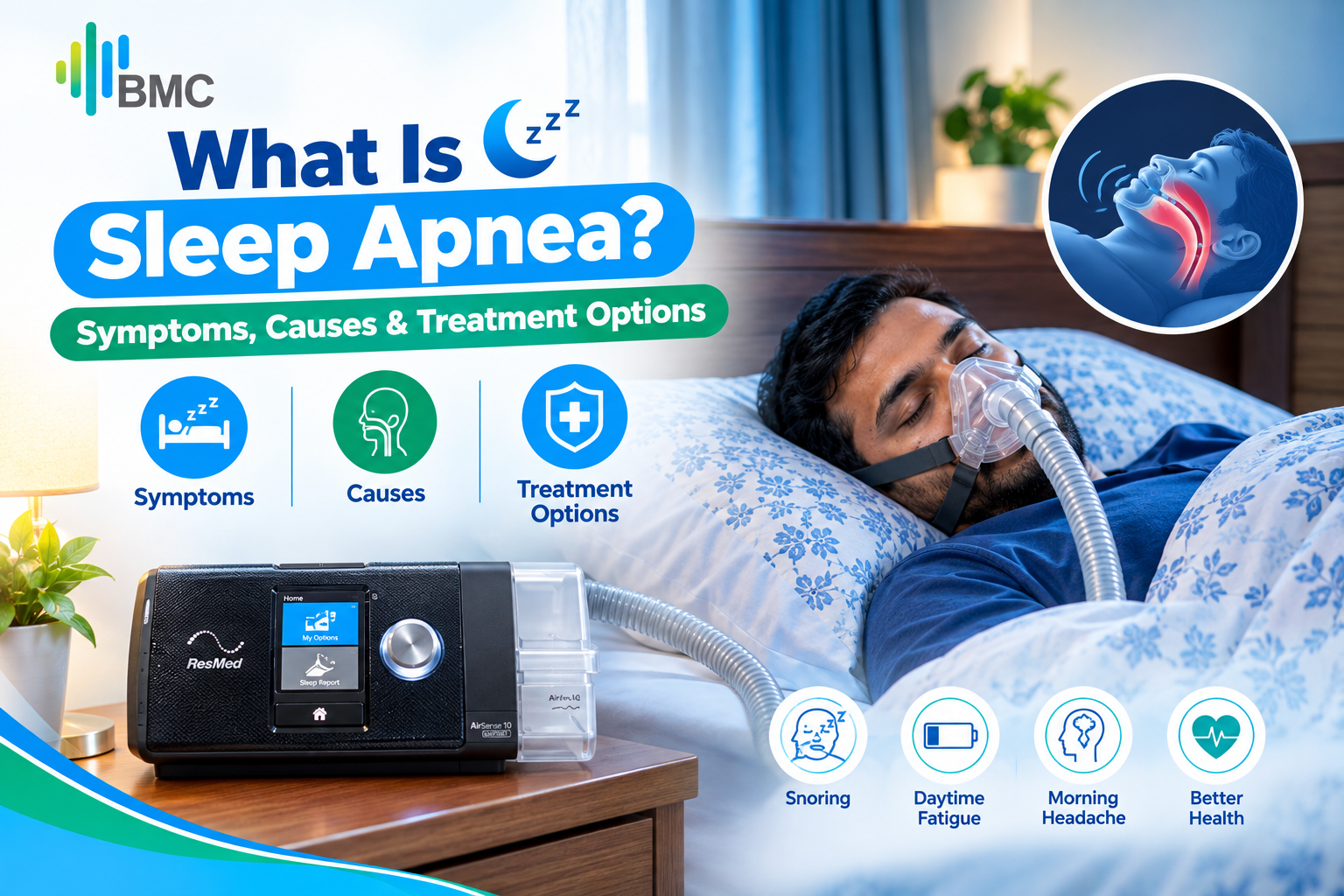
Sleep apnea is a sleep disorder in which breathing repeatedly stops and starts during sleep, usually because the airway becomes partially or fully blocked. These pauses can happen many times a night, often without the person realizing it, and they disrupt both oxygen flow and sleep quality. The most common warning signs are loud snoring, gasping or choking during sleep, and persistent tiredness during the day.
This guide explains what happens in the body during a sleep apnea episode, what causes it, how it’s typically diagnosed, and the treatment options a physician might consider. It’s written for general education and doesn’t diagnose sleep apnea or recommend a specific treatment for any individual. Those decisions should come from a qualified physician after proper evaluation.
What Is Sleep Apnea, Exactly?
Sleep apnea is a sleep-related breathing disorder that causes repeated interruptions in normal breathing during sleep, either because the upper airway physically collapses or because the brain temporarily stops signaling the breathing muscles correctly. Each pause, called an apnea, can last several seconds and may be followed by a brief awakening the person doesn’t remember, as the body reacts to the drop in oxygen and restarts normal breathing.
This cycle, breathing stopping, oxygen dropping, the body briefly waking to restart breathing, repeating throughout the night, is what makes sleep apnea different from ordinary snoring or restless sleep. Snoring is a sound. Sleep apnea is a disruption in the actual mechanics of breathing, and it’s confirmed through a sleep study rather than through symptoms alone.
What Happens in the Body During a Sleep Apnea Episode?
During normal sleep, the muscles in the throat relax somewhat but still keep the airway open enough for air to pass freely. In obstructive sleep apnea, these muscles relax too much, and the soft tissue at the back of the throat collapses inward, narrowing or fully blocking the airway. Airflow drops or stops entirely for a period, oxygen levels in the blood begin to fall, and the brain registers this as a problem, triggering a brief arousal that tightens the airway muscles again and restarts breathing.
This sequence can repeat tens of times an hour in more severe cases. The person rarely wakes up fully enough to remember it, but the repeated fragmentation prevents deep, restorative sleep stages from happening normally, which is why daytime tiredness is such a consistent symptom even when total sleep time seems adequate.
Types of Sleep Apnea
Not all sleep apnea works the same way. There are three recognized types.
| Type | Mechanism | How common |
|---|---|---|
| Obstructive sleep apnea (OSA) | Physical collapse of the upper airway during sleep | The most common form by far |
| Central sleep apnea (CSA) | The brain fails to send proper signals to the breathing muscles | Less common; often linked to heart or neurological conditions |
| Mixed (complex) sleep apnea | A combination of obstructive and central patterns in the same person | Identified during a sleep study |
Obstructive sleep apnea is the type most commonly discussed and treated, and it’s the focus of most CPAP-based therapy, including the treatment section below.
How Common Is Sleep Apnea?
A 2019 global analysis published in The Lancet Respiratory Medicine (Benjafield et al.) estimated that approximately 936 million adults aged 30 to 69 worldwide have some degree of obstructive sleep apnea, based on population modeling across multiple countries. This is a global estimate, not a country-specific count, and it illustrates a broader point: sleep apnea is common and widely under-diagnosed because its symptoms are often mistaken for ordinary snoring or simple tiredness rather than investigated as a distinct medical condition.
For context specific to Bangladesh, including local diagnostic pathways and clinical developments, see our detailed guide on sleep apnea in Bangladesh: symptoms, diagnosis, and treatment.
What Causes Sleep Apnea?
Direct answer: Obstructive sleep apnea is caused by relaxation of the throat muscles during sleep combined with factors that narrow the airway, such as excess tissue around the neck, enlarged tonsils, or certain jaw and facial structures. Central sleep apnea is caused by a disruption in the brain’s signaling to the muscles that control breathing, often related to underlying heart or neurological conditions.
Several factors increase the likelihood of developing obstructive sleep apnea:
- Excess body weight, particularly fat distribution around the neck and upper airway
- Larger neck circumference, which can physically narrow the airway
- Age, with risk generally increasing in middle age and beyond
- Sex, with OSA diagnosed more often in men, though it’s also common in women, particularly after menopause
- Family history of sleep apnea or airway-related conditions
- Smoking and alcohol use, both of which can relax throat muscles or increase airway inflammation
- Nasal congestion or structural issues, including enlarged tonsils or adenoids
- Certain jaw structures, such as a recessed lower jaw
Having one or more of these risk factors doesn’t confirm a diagnosis, and their absence doesn’t rule one out. They simply increase the statistical likelihood, which is why a sleep study, not a risk-factor checklist, is what actually confirms the condition.
Symptoms of Sleep Apnea
Direct answer: The most commonly reported symptoms of sleep apnea are loud, frequent snoring, witnessed pauses in breathing during sleep, gasping or choking episodes at night, and persistent daytime sleepiness despite a full night in bed. Not everyone with sleep apnea snores loudly, and not everyone who snores has sleep apnea.
| Nighttime symptoms | Daytime symptoms |
|---|---|
| Loud, chronic snoring | Excessive daytime sleepiness |
| Witnessed pauses in breathing | Difficulty concentrating |
| Gasping or choking during sleep | Morning headaches |
| Restless, frequently interrupted sleep | Irritability or mood changes |
| Frequent nighttime urination | Dry mouth or sore throat on waking |
| Waking up feeling unrefreshed | Falling asleep during quiet daytime activities |
Because many nighttime symptoms happen during sleep, a bed partner or family member often notices them first. If someone close to you has mentioned loud snoring with breathing pauses, that observation is worth raising with a physician even if you feel generally fine during the day.
Is Sleep Apnea Serious?
Direct answer: Yes, if left untreated, sleep apnea can meaningfully affect health beyond just poor sleep quality. Research in sleep medicine has associated untreated obstructive sleep apnea with a higher risk of high blood pressure, cardiovascular strain, and daytime accidents linked to drowsiness, including while driving. It has also been studied in connection with metabolic conditions such as type 2 diabetes.
This doesn’t mean every case leads to these outcomes, and severity varies significantly between individuals. It does mean the condition is worth a proper evaluation rather than being treated as a minor inconvenience or normal part of aging.
How Is Sleep Apnea Diagnosed?
Direct answer: Sleep apnea is diagnosed through a sleep study, either an in-lab polysomnography or a home sleep apnea test, which records breathing patterns, oxygen levels, and airway activity overnight. The study generates an Apnea-Hypopnea Index (AHI) score, the average number of breathing disruptions per hour, which a physician uses to confirm the diagnosis and classify severity.
| AHI Score (events per hour) | General severity classification |
|---|---|
| Below 5 | Not considered sleep apnea |
| 5 to 15 | Mild |
| 15 to 30 | Moderate |
| Above 30 | Severe |
This classification is a standard used in sleep medicine and is meant to be interpreted by the physician who ordered the study alongside your symptoms and overall health, not read independently as a self-diagnosis tool. For a full walkthrough of what the diagnostic process typically looks like in Bangladesh specifically, including which specialists to see and what a sleep study involves locally, see our guide on sleep apnea in Bangladesh: symptoms, diagnosis, and treatment.
Treatment Options for Sleep Apnea
Direct answer: There is no single universal treatment for sleep apnea. Depending on the type and severity diagnosed, treatment can include CPAP or BiPAP therapy, oral appliances, positional therapy, weight management, or surgery. Most treatment plans begin with the option that matches the diagnosed severity while being the least invasive appropriate choice.
| Treatment | How it works | Typically considered for |
|---|---|---|
| CPAP (Continuous Positive Airway Pressure) | Delivers constant air pressure through a mask to keep the airway open | The most common first-line treatment for moderate to severe OSA |
| Auto CPAP (APAP) | Automatically adjusts pressure within a prescribed range | Patients whose pressure needs vary night to night |
| BiPAP (Bilevel Positive Airway Pressure) | Delivers two separate pressure levels for inhaling and exhaling | Certain complex cases, including some central sleep apnea presentations |
| Oral appliances | Repositions the jaw to help keep the airway open | Mild to moderate OSA, or patients who can’t tolerate CPAP |
| Positional therapy | Discourages back-sleeping, which can worsen airway collapse in some patients | Patients whose apnea is significantly worse on their back |
| Weight management | Reduces excess tissue around the neck and upper airway | Cases where weight is a contributing factor |
| Surgery | Various procedures depending on the anatomical cause | Cases with an identified anatomical obstruction where other treatments haven’t worked |
CPAP therapy is the most widely prescribed first-line treatment for obstructive sleep apnea because it directly addresses the airway collapse mechanically. It doesn’t cure sleep apnea; it manages the airway obstruction for as long as it’s used consistently, based on your physician’s guidance.
If CPAP Is Recommended: What Comes Next
If your physician prescribes CPAP therapy, the next decisions involve choosing the right machine and mask for your prescription and lifestyle, not the medical diagnosis itself. A few resources are useful once you reach this stage:
- Our guide on how to choose a CPAP machine for sleep apnea walks through matching a machine to your prescribed pressure mode, mask type, and daily routine.
- The CPAP machine price in Bangladesh guide covers current pricing across brands and models.
- Our comparison of the best CPAP machines in Bangladesh breaks down specific models by use case and budget.
- For a brand-level look at your options, see ResMed vs Philips vs BMC CPAP machines, and for a specifically budget-focused option, BMC CPAP machine price in Bangladesh breaks down BMC’s lineup by price.
- Once you have a machine, our guide on cleaning and maintaining a CPAP machine in Bangladesh’s climate explains the ongoing care routine needed to keep it hygienic and working properly.
- If you’re not yet sure CPAP is a long-term fit, our comparison of renting vs buying medical equipment in Bangladesh explains when a trial rental period makes more sense than an upfront purchase.
Common Misconceptions About Sleep Apnea
- “Only overweight people get sleep apnea.” Excess weight is a risk factor, not a requirement. People with average body weight can develop OSA due to airway anatomy, and this group is sometimes underdiagnosed because clinicians don’t suspect it.
- “If I don’t snore, I don’t have sleep apnea.” Snoring is common but not universal in sleep apnea, particularly in central sleep apnea, where snoring may be minimal or absent.
- “Sleep apnea will go away on its own.” For most diagnosed cases, sleep apnea doesn’t resolve without some form of intervention, whether that’s weight management, an oral appliance, CPAP, or surgery, depending on the cause. It’s a condition to be managed, evaluated by a physician, not something to wait out.
- “CPAP is the only treatment, and it’s permanent.” CPAP is the most common first-line treatment, but oral appliances, positional therapy, weight management, and surgery are all recognized alternatives or complements depending on the diagnosis.
When Should You See a Doctor?
Direct answer: See a physician if you or someone in your household has noticed loud snoring combined with witnessed pauses in breathing, gasping or choking during sleep, or persistent daytime sleepiness that isn’t explained by an obvious cause. These combined patterns, rather than any single symptom on its own, are typically what prompt a referral for a sleep study.
There’s generally no benefit to waiting until symptoms feel severe before seeking an evaluation. A general physician can assess your symptoms during a routine consultation and refer you onward if a sleep study is warranted.
Frequently Asked Questions
What is the main cause of sleep apnea?
The most common cause, in obstructive sleep apnea, is relaxation of the throat muscles during sleep combined with factors that narrow the airway, such as excess neck tissue, enlarged tonsils, or certain jaw structures. Central sleep apnea, a less common type, is caused by a signaling problem between the brain and the muscles that control breathing.
Can sleep apnea be cured without CPAP?
For some patients, particularly those where excess weight or a specific anatomical issue is the main cause, treatments like weight loss, oral appliances, positional therapy, or surgery can significantly reduce or resolve symptoms without long-term CPAP use. This depends entirely on the individual case and should be discussed with a physician.
How do I know if I have sleep apnea or just snore?
Ordinary snoring is a sound caused by airway vibration and doesn’t necessarily involve breathing pauses. Sleep apnea involves actual interruptions in breathing, often accompanied by gasping, choking, or witnessed pauses, along with daytime symptoms like persistent tiredness. A sleep study is the only reliable way to tell the difference.
Does sleep apnea affect children too?
Yes. Sleep apnea in children is often linked to enlarged tonsils or adenoids and can present differently than in adults, sometimes as behavioral issues or hyperactivity rather than obvious sleepiness. A pediatrician or ENT specialist should evaluate a child directly if this is suspected.
Is sleep apnea a lifelong condition?
It depends on the cause. Sleep apnea linked to a treatable anatomical issue or excess weight can improve substantially or resolve with targeted treatment. Sleep apnea linked to more fixed structural or neurological factors is often managed long-term rather than cured outright. Your physician can clarify which pattern applies to your case.
What is the difference between sleep apnea and insomnia?
Sleep apnea is a breathing disorder that physically interrupts sleep due to airway obstruction or signaling issues, while insomnia is difficulty falling or staying asleep without a breathing-related cause. The two can sometimes coexist, but they require different diagnostic approaches and treatments.
Where to Go From Here
Understanding what sleep apnea is is the first step. The next step, getting evaluated, is a conversation with a physician, not a decision made from a symptoms checklist alone. If you’re in Bangladesh and want to understand what that evaluation process typically looks like locally, including where sleep studies are available and what to expect, our guide on sleep apnea in Bangladesh: symptoms, diagnosis, and treatment covers this in detail.
If a physician has already confirmed a diagnosis and recommended CPAP therapy, Medical Mart BD, a medical equipment supplier in Bangladesh serving patients across Dhaka and other areas, lists CPAP and BiPAP machines from ResMed, Philips, BMC, and ResFree on its CPAP machine category page, alongside the wider shop for related home healthcare equipment.
Why This Guide Was Written This Way
This article focuses on explaining sleep apnea clearly, without exaggerating risk or oversimplifying treatment into a single option. Over roughly four years of medical equipment supply and customer support, Medical Mart BD has worked with patients, caregivers, and clinics across Bangladesh who were often confused about the difference between snoring and sleep apnea, or unsure what came after a diagnosis. This guide reflects that pattern of questions, built around general medical understanding of the condition rather than clinical or diagnostic expertise, which belongs to a physician.
Conclusion
Sleep apnea is a breathing disorder, not just a snoring problem, and it’s confirmed through a sleep study rather than symptoms alone. Recognizing the warning signs- loud snoring, witnessed breathing pauses, and persistent daytime tiredness- is the first step toward getting evaluated. Once a diagnosis and treatment plan are in place, and if CPAP therapy is part of that plan, you can explore CPAP machines available at Medical Mart BD and compare current models, features, and prices before choosing the option that fits your prescription.
Author Byline & Expertise
Md Hasibul Islam, Founder, Medical Mart BD
Md Hasibul Islam has spent four years in medical equipment supply and customer support through Medical Mart BD, working with patients, family caregivers, clinics, and healthcare professionals across Bangladesh on equipment selection for CPAP and BiPAP therapy once a diagnosis and treatment plan are in place.
In December 2025, he attended two consecutive international conferences focused on sleep disorders and sleep apnoea: the 2nd International Conference of the Nepalese Society of Sleep Disorders (5-6 December 2025, Kathmandu, Nepal) and the 10th International Conference & Live Surgery on Sleep Apnoea, organized by the Association of Surgeons for Sleep Apnoea, Bangladesh (ASSAB), held 13-14 December 2025 at Dhaka Medical College Hospital and Pan Pacific Sonargaon, Dhaka. Both conferences were attended primarily by physicians, surgeons, and sleep medicine specialists. This article reflects general medical information compiled from established sleep medicine sources and business experience in medical equipment supply. It is not medical advice, does not diagnose sleep apnea, and does not replace consultation with a qualified physician or sleep medicine specialist.